
Erica Desper, Bernadette Samuels and Amelia Kinsolving are moms supporting moms (and all parents) on the path to better sleep and smoother potty training, since 2010. Confident Parenting was named “Best” and "Family Favorite" resource by the Main Line Parent, Bucks County Parent and Philadelphia Family communities in 2022, their 9th and 10th and 11th accolade from parents!
4 Easy Ways to Spring Baby's Sleep Forward for Daylight Saving
Erica Desper
Our Team Lays Out 4 Easy Ways to Spring Baby's Sleep Forward When the Clocks Change...

While springing forward is not quite as disruptive as falling back on the clock, it can leave your little ones feeling “off” for a few days. Don’t panic! Even the most sensitive children can adjust.
Here
are some tips to help your family prepare and adjust to any time change:
An overtired child has a harder time adjusting and coping with any change. Make a special effort in the days approaching the time shift to ensure that your child gets adequate sleep.
When the clocks change in either direction, be sure to head outside
with your baby first thing in the morning
or at least open the curtains and let in the natural light. Early morning exposure to natural light helps to set/reset your child’s internal clock and adjust to the change. Aim for 30 minutes of sunlight each morning for about a week following the change. Also be sure to “put the house to sleep” by dimming lights and activity about 30-60 minutes
before the goal sleep time to prepare their brain and body to fall asleep earlier.
There are a few ways to approach springing forward. You can decide which to use based on how the current schedule is working for you and on your child’s level of sensitivity to differences in timing.
Option 1: Do Nothing (Great for Early Risers!...And Very Young Babies)
If your older baby or child is waking too early and this is leading to a schedule that is less than ideal, this is the time change for you! You can use the later morning wake time to shift nap(s) and bedtime to the later timing you’ve always wanted.
For example if the schedule prior to the time change was wake at 5:30 am, nap at 11:30 am, and bedtime at 6:30 pm, it would now look like wake at 6:30 am, nap at 12:30 pm and bedtime at 7:30 pm. The span of awake times between sleep remains the same so your child won't likely notice the difference. Voila!
For young babies who are not yet on a set clock schedule (under 4-6 months of age) and, instead, need to sleep every 60, 75 or 90 minutes, simply follow that pattern and act as if nothing has changed.
Option 2: Jump to the New Clock (Ideal for Adaptable Kiddos)
If the current schedule is working for you and your child, your goal is to get back to those clock times – but on the new clock- as quickly as possible. This requires waking your child at their typical wake time on Sunday morning and offering meals, naps, routines and bedtime at the same times on the new clock as you were before.
Keep in mind, however, that everything will feel a full hour earlier to your child (because it is!) so there is a potential for a bit of a struggle falling asleep.
For example, if bedtime is usually 7 pm you would put baby down at 7 pm on the new clock but it may feel like 6 pm to them. As a result, they may not fall asleep as quickly or easily. You may need to be a bit more flexible and offer some extra support at bedtime but with this method they should adjust rather quickly – typically within a few days to a week.
Be choosy about how much support you offer (if any) and how long you offer it. Meaning, avoid old habits that have been eliminated such as fully assisting to sleep in favor of lesser interventions such as checking on baby briefly at intervals. If you know your child is prone to unpleasant behaviors when they are under tired (i.e. coming out of bed a bajillion times at bedtime!) you may want to consider shifting their schedule in advance.
Option 3: Prepare 4 or More Days in Advance (Ideal for Very Sensitive Kiddos, Not Usually Necessary)
If your baby tends to be more sensitive to shifts in timing, you may want to prepare for the change by gradually shifting their schedule in advance. This approach spreads the hour difference over at least four days which, in our experience is not usually necessary for the spring change.
For example, starting on Thursday morning wake baby 15 minutes
earlier than usual* to start the day. Then offer meals, naps, and bedtime 15 minutes earlier as well. On Friday wake baby 15 minutes earlier than you did on Thursday (30 minutes earlier than usual) and repeat this process on Saturday and Sunday.
For a baby who generally sleeps from 7:30 pm-7 am and naps at 9am and 1pm, for example, you would wake at 6:45 on Thursday morning, move naps earlier to 8:45 and 12:45 and put them to bed at 7:15. Then on Friday wake them at 6:30 and put them to bed at 7:00. On Saturday wake them at 6:15 and put them to bed at 6:45. By Sunday when you wake them at 6 am it will read 7 am on the new clock and you will be back to their usual clock schedule, without it feeling a full hour early.
Wednesday: Wake 7:00am, Naps 9:00am & 1:00pm, Bedtime 7:30pm
Thursday: Wake 6:45am, Naps 8:45am & 12:45pm, Bedtime 7:15pm
Friday: Wake 6:30am, Naps 8:30am & 12:30pm, Bedtime 7:00pm
Saturday: Wake 6:15am, Naps 8:15am & 12:15pm, Bedtime 6:45pm
Sunday: Wake 7:00am (on the new clock), Naps 9:00am & 1:00pm (on the new clock), Bedtime 7:30pm (on the new clock)
If you are unable to shift the schedule in advance, or want to spread it over two days rather than four, use the split the difference option.
Option 4: Split the Difference (The Most Realistic Option for Many)
If all that advanced shifting and waking seems unnecessary or feels too complicated but a one hour jump feels like too much, then you may fall into the camp of splitting the difference and taking just two days to catch up to the new clock. For example, let's say baby usually wakes at 7am, naps at 9am & 1pm and goes to bed at 7:30pm. To spread the hour change over just two days, wake them at 7:30am on Sunday and put them down for their nap 30 minutes later than usual*
at 9:30. They will be only 30 minutes under tired rather than the full 60. Do the same with all other meals and sleep periods throughout the day. Then the following day shift 30 minutes more so everything is happening at their typical times on the new clock. Or, for a non-napping child whose bedtime is 8 pm, you could put them down at 8:30 which will feel like 7:30 to them. Then the following day, shift 30 minutes again landing back at an 8 pm bedtime on the new clock.
Sunday: Wake 7:30am, Naps 9:30am & 1:30pm, Bedtime 8:00pm
Monday: Wake 7:00am, Naps 9:00am & 1:00pm, Bedtime 7:30pm
Regardless of your approach, be prepared that the days and nights will feel a little strange to your baby who can’t really understand what is going on. Don’t stress if your child doesn’t adjust quickly. While most adjust within a few days, some can take a few weeks to fully adjust!
And remember that springing forward can mean daylight at bedtime and much earlier in the morning which can interfere with your child’s ability to fall or stay asleep. Don’t fall into the trap
of shifting bedtime later waiting for it to grow dark or of letting baby start the day as soon as the sun comes up. Instead, consider purchasing room darkening shades or blackout curtains
to keep your little one on track.
If all else fails remember that Spring is coming. Sunshine and fresh air make parenting feel SO much better :) Need support for this or any sleep struggle? Our team is here to help!
*It is important to note that, if you are shifting the schedule in advance of this change, you are shifting the schedule incrementally earlier. However, if you are shifting after the clocks have already changed, you are shifting incrementally later.
**As Amazon Affiliates we may earn from qualifying purchases**
Meet the Sleep & Potty Team!...





Here are 10+ ways to lessen the chaos of the season, from the mompreneurs in our Confident Parenting Village...

The back to school season tends to elicit a full array of emotions from parents and children alike. As much as you or they may be in the camp of "I'm not ready to think about it yet!" taking time now to ensuring your kiddo heads into the year well-rested will help them (and you!) survive and thrive. Listen and read on for actionable steps to support your neurotypical or neurodivergent child to head back to school well rested.
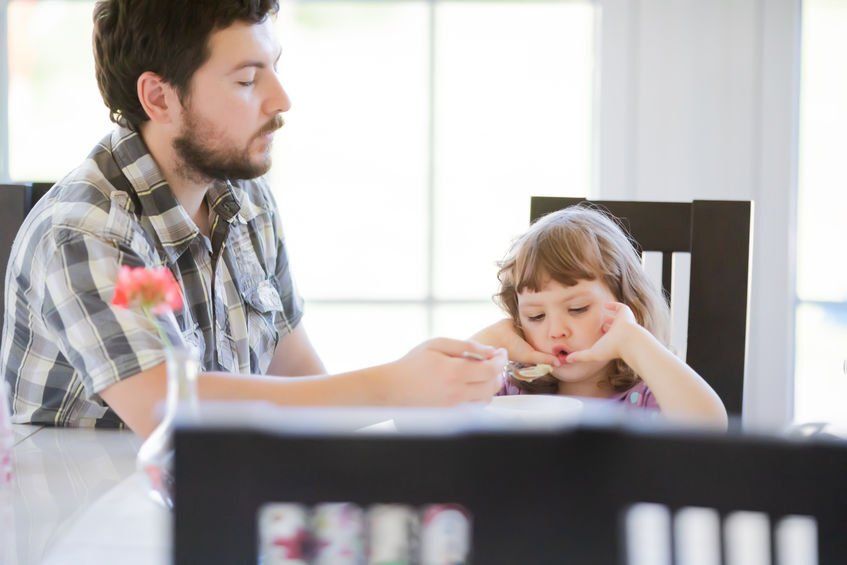
Ask a group of parents to list off common stressors, and ‘picky eating’ is bound to be shouted out. Difficult mealtimes with young children are so common, that when parents bring up their concerns at the pediatrician’s office, they are often told “don’t worry, it will get better – they will grow out of it”. While this can be true, it’s certainly not helpful feedback. A child may grow out of ‘picky eating’, it may be a phase – but why should we as parents be told to just grin and bear it? The g ood news is that there are a few things that can be done to make mealtimes in your home feel less stressful. Below are a few examples of ways that you can make mealtimes feel more manageable. 1. Get off of the internet. The internet is a wonderful place with all kinds of information at your fingertips. Have a question [How much should my toddler eat? Is it ok for me to offer dessert at every meal? My child doesn’t eat vegetables , what should I do? I don’t know what percentile my kid is on their growth chart, should I? What do I do if my child holds food in their mouth?], get an immediate answer, or several. The problem is that the information on the internet can be put there by literally anyone. And you can bet that you will find 1,000,001 different answers to your question. Parents who rely on the internet, and worse, social media, for guidance can find themselves feeling more overwhelmed, confused and defeated then before their searches. This leads to constant second guessing if you are doing the right thing, and impacts how you feel about feeding your child. Instead, find one or two trusted people who have been in your shoes, and a pediatrician or expert who you trust to offer you sound advice. Limiting the advice input can seriously help decrease the “am I doing it right” overwhelm many parents experience. 2. Don’t compare your experience to that of another family. Every child, and every family, is different. Some kids will eat everything that their parents put in front of them, and some will turn their nose up at something as shocking as birthday cake. There are so many factors that impact on what a child eats. Comparing what your child does to what your friend’s child does can be an exercise in torture. Give yourself, and your friend, a break, and appreciate that your kids are on their own path. Whoever eats broccoli better is irrelevant. Instead, celebrate every child in your life for what THEY can do, independent of the other kids. Is sitting in the chair for two minutes a big deal for your kid? Celebrate that! Did Johnny down the street try a new food? Go Johnny! It is a cliché, but a truth – comparison is the thief of joy. 3. Manage your own expectations and work with your child and family. The number one cause of stress at mealtimes, in my humble opinion, is unreasonable expectations on the part of the adult. Eating is a chore for many young children. It is rare to find a small child who would rather sit down and eat, then continue playing or doing another activity. If sitting at the table is a struggle for your child, consider changing up the seating and/or shortening the amount of time that you expect them to be seated. For many very small children, just 5-10 minutes is a huge feat. If your child is always leaving lots of food on their plate, start observing how much they successfully and willingly eat, and alter how much you put in front of them to begin with. This is a really simple way to decrease the stress of wasted food. Simply do not put so much in front of them. If your child never seems hungry, look at their day. Are they drinking a lot of fluid or grazing on snacks all day? Then they aren’t going to be hungry when you sit them down for a meal. Consider limiting free access to food and drink, or lowering your expectations of how much they will eat at a meal. Of course, mealtime stress can be the result of many factors. If you are concerned about your child’s eating habits, or need help identifying ways to decrease stress in your home, there is help available!

With Summer vacation plans in full swing, one thing that can be easily overlooked is how to maintain your child’s sleep habits while you’re away. Travel can take quite a toll on little ones, particularly if you are traveling through time zones. Here are some tips to save your child’s slumber—and your sanity—this travel season... Enjoy Yourselves! Trying to keep your child’s routine and schedule exactly the same will likely be an exercise in frustration. If your little one is flexible and not very sensitive to over tiredness you may be able to throw caution to the wind and just get back on track when you return. More sensitive children will have a harder time rolling with the punches and, in that case, the trip may be more enjoyable if you still make sleep somewhat of a priority. Try to strike a balance each day. For example, can you get your child a great morning nap and then head out for the day? Or can you have a busy morning and then make sure to get in a solid afternoon nap? If daytime is totally off the rails can you coordinate an early bedtime to offset that? Bring a Little Bit of Home With You Be sure to bring pieces of home with you when packing. Pack your child's sleep sack, sound machine and lovey or favorite stuffed animal which can help ease the anxiety that often comes with sleeping in a new environment. If you will be using a pack and play, you may want to do a few practice sessions by having them sleep in it at home first so it isn’t a totally foreign space. If your child is sleeping in a bed, consider bringing a portable bed rail. Toddler air mattresses like the Shrunks toddler travel bed or the hiccapop can help create a separate sleep space for children who have outgrown the pack and play. I even go so far as to pack a roll of thick black trash bags and tape to black out a bright room for my light sensitive guy (see below). It’s nearly impossible to travel light with kids, anyway, so why not be prepared! Start the Trip Well Rested As much as possible try to ensure that your child is well napped before you leave. That way, if the rest of the day doesn’t fall into place, they (hopefully!) won’t be quite as overtired. That nap typically is the most important one and will give them a head start on the day. Tackle Jet Lag Head On If you are traveling to a different time zone the best approach is to get onto the new local schedule as soon as possible. When traveling late at night, it is fine to allow a day of sleeping in and off naps but then be sure to get onto the local schedule the next full day – even if it means waking your child the next morning. If they usually wake at 7 a.m. at home, wake them at 7 local time. If you travel earlier in the day, but your child’s nap happens late, say starting at 3:00 instead of 12:00, wake them early enough from the nap that they can go down at their normal 7 or 8 bedtime on the local clock. Be prepared that, by the time they start to seem adjusted, it will be time to turn around and do it all over again! So, if the time difference is minimal and/or the trip is short, consider keeping your kiddo on local time during the trip. If not, focus more on sleep totals than sleep timing until you return. Don’t Skip the Nap! A few car or stroller naps on vacation are okay and certainly preferable to no sleep at all. If your child cannot sleep out and about your options are a bit more limited and carving out time for at least one solid nap each day in a sleep conducive environment may be necessary for everyone’s sanity. Sleep Learning and Vacation Don’t Mix If you are in the process of sleep learning at home you will likely need to resign yourself to a vacation from that too. Since consistency and scheduling are key to improving sleep habits, you likely won’t have much success while traveling. If you are guests or are hosting guests, you may be less willing and able to enforce the sleep “rules”. Just be sure to get back to your regular routines as soon as you get home and/or as soon as the guests leave. What Happens in Vegas Stays in Vegas That’s our motto regarding travel and sleep too. Meaning, if you need to share a room/bed or offer extra help to get your child to sleep or back to sleep while away (and don’t usually do so when at home), leave those habits at your destination. Be cautious not to drag vacation sleep habits back with you but, rather, go right back to putting your child down at home in the location and way you did before the trip. Yes, it is ideal to keep your child’s schedule on track but don’t sacrifice all the fun of your trip! If you can jump back to an ideal schedule and house rules when you get home it takes many little ones just a few days to adjust. Even when you CAN stick to the schedule, travel can leave your child overtired and cranky. When possible, try to make the first full day at home or, even better, the first few days, all about catching up on sleep and recovering. If all else fails and your little one moves into full meltdown mode remember that this too shall pass but vacation memories last a lifetime. If you need help getting sleep back on track after travel, we can help! *As an Amazon affiliate I may earn on qualifying purchases**
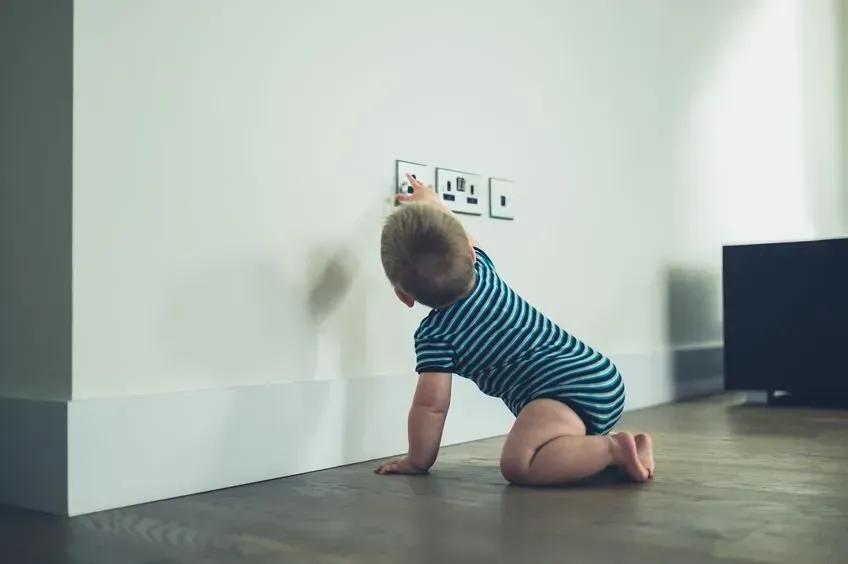
Once you've decided childproofing your home is necessary , then you'll need to decide whether to do it yourself or hire a professional. Our friends at Safer Babies are here to weigh in with some food for thought... Safer Babies is the only professional member of the International Association For Child Safety in the Philadelphia & Philly Tri-State area. The International Association for Child Safety® (IAFCS) is a network of child safety professionals and babyproofers. IAFCS Members are recognized childproofing experts and are ready to help you make your home a safe place for your little one. You can trust us to be knowledgeable, efficient, professional, and friendly. We will make sure your baby-proofing is done right the first time, with the best care of your home & the day-to-day safety of your little one in mind. (It's not unusual for us to be called to come to fix incorrect or failing installs by clients or handymen. We are happy to do so, but you may save the extra hassle, cost & possible safety hazards of other well-intentioned attempts if you start with us. Baby safety & skilled installation to make the safest environment for clients' children is our full-time job. We can save you time by completing your childproofing quickly and efficiently, leaving you more time to spend with your family. We are professional problem-solvers and can devise safety solutions for even the most challenging situations. We have experience dealing with all sorts of hazards in all types of homes, and can readily provide products and services to suit your specific needs. We have access to hundreds of specialized safety products that you may not find on your own. We provide professional installation of products so that they function safely and conveniently. We can save you money by directing you to products that will work best for your needs, helping you avoid trial-and-error purchases and installation. We keep fellow members up-to-date on new or hidden hazards in the home. As IAFCS members we are committed to a Code of Ethics to maintain high industry standards.

March is National Sleep Awareness month and the perfect time to give some thought to whether your child and family are getting adequate sleep. According to recent statistics , an average of 35% of kids ages 4 months - 14 years are not (!) and the effects of insufficient sleep can take a toll on your child's mood, behavior, learning and development as well as the family as a whole. Fortunately, there is help. Since 2011 o ur team has supported countless families since 2011 to improve the quality and quantity of their sleep and address nap & bedtime battles, frequent night waking, fears & separation anxiety, and moving away from feeding/rocking/holding to sleep and co-sleeping. Our 1:1 support options , available virtually or in our Haverford, PA office, include a 60-minute mini session for scenarios where just a few tweaks are needed, up to a package that includes one month of daily support and a medical screening with a physician who is triple-board certified in pediatrics, pulmonology and sleep medicine, Dr. Funke-Afolabi-Brown. Reach out to learn more about how we can support your family's sleep needs today.

Thank you to Kristin Quinn of Toddlers and Tomatoes for this guest post ! When the average person gets hungry, they eat. Sometimes, they even think about a delicious food, their mouth starts to water, they get excited about obtaining said food, and they look forward to their snack or meal. This is why it is SO difficult for the ‘average person’ to understand feeding issues. Sure, all kids are picky eaters … to an extent, and for a period of time, usually. But people, even educated, medical professionals on occasion, can’t seem to wrap their heads around ‘feeding issues’ that go beyond the ‘typical’ childhood phenomenon of complaining at dinnertime. Even when parents themselves have a child with feeding issues, it is still a mystery. Even though they are living it day to day, it is still hard to comprehend. I like to break it down like this: If your child is having a hard time with food, think about all of the steps that are involved in eating. Really, try it. You’ve probably never given a second thought to the numerous steps involved in consuming food. Here is just a list off the top of my head. I am sure that my speech therapist, occupational therapist, GI doc, and dietician friends can come up with a bunch more! Child becomes aware that mealtime is approaching. They start to think about whatever it is that makes eating difficult for them (smell, texture, hunger, sitting still, using a utensil, chewing, swallowing – or lack of hunger, etc.) They may start talking about not wanting to come to the table, or start crying, or acting out. Child is asked to come to the table, closer to the ‘eating experience’. They don’t want to. They may not want to sit in the chair, they may not want to see the food or smell it. They might physically resist coming to the table. Child sees the food on the table, or worse, on their plate in front of them. They have to accept the food visually. They have to SEE that food that is so difficult for them to manage (for whatever reason). Child is presented with the food in front of them, or prepped on a utensil for them to pick up or allow into their mouth. Child smells the food. So now, they are seated, which may be an issue for them, they are looking at the food, they are smelling the food … all before it is even in their mouth!! Child has to PICK UP THE UTENSIL or the food itself and PUT IT IN THEIR MOUTH. Imagine how much that takes out of them when they DON’T want to eat what is in front of them. They have to either put it in themselves, or allow it to be put in. This is where a lot of behaviors come out …pushing, throwing the food, crying, gagging, coughing (even at just the sight or smell). Once the food gets in, if it gets in … they have to manage the food. Maybe they don’t have the skills to chew and swallow properly, or maybe they are sensitive to different textures. Here is where we often see an increase in gagging and coughing. Sometimes the gags and coughs are a result of all of this time to think about how difficult eating is going to be in conjunction with actually having the food in their mouth. Then, once the kiddo has managed the food in their oral cavity, they have to SWALLOW it. Again, often gagging and coughing are at play, and sometimes vomit. But why? What is the issue …are they not managing the food effectively? Are they worked up with anxiety? Are there other, yet to be determined issues? Once it is swallowed, there is a whole new set of ‘steps’. How is their GI tract going to handle the food? Are there allergies? Diagnosed? Undiagnosed? Are they going to vomit some more? Are they going to be constipated? Are they going to have a reflux episode? When you start to think of all the steps involved in eating, it is a wonder it comes so easily to the rest of us. When trying to support a child with feeding issues, or a friend, or yourself, consider all that is truly involved in eating. What would you add to the list?

Treating torticollis is one of my greatest passions as a pediatric PT. Research has shown that the earlier a baby begins PT, the better their outcomes will be and the shorter their treatment duration will be. The best thing to do is to reach out to a pediatric PT as soon as you notice any signs of torticollis . These signs include: * A head tilt to one side only * A head turn preference to one side only (may also see head flattening on the back of the head on this side) * Use of one arm more than the other * Preference to feed from one side only (breast or bottle) Below are some of my favorite tips and tricks for treating torticollis that a parent or caregiver can start right away, even before you see your pediatric PT. You will notice that neck stretches are not included in these tips. I strongly believe that a baby should be evaluated by a practitioner who is skilled in this area before starting stretches on your own! Tip #1: Baby turns head side to side Encouraging baby to actively turn their head to both sides is a great way to help them improve their neck symmetry and flexibility. This activity can be done in any developmental position: on the belly, on the back, on the side, or sitting in your lap facing you. When baby makes eye contact with you, slowly move your face to the right and left and have baby follow your face with their eyes. Be sure to move far enough to each side so baby has to turn their head to keep following you! If your baby prefers to turn their head to one side only, it is a great idea to practice this more to their non-preferred side. The goal is to promote equal and symmetrical movement in the neck to decrease the head turn preference. Tip #2: Change the set up of baby’s environment Environmental set up can be a big factor in treating torticollis. If your baby always has to look in one direction to see a caregiver approaching, or is always facing the same way in the crib or on the changing table, it can contribute to a head turn preference. To switch things up, place baby in their crib or bassinet in the opposite orientation as their norm so they have to turn their head to the other side to see someone approaching. This can be done on the changing table too, and offers quite an experience for the parent to change your baby’s diaper with your non-dominant hand! Tip #3: Limit time in containers Containers are anything that “contains” your baby, and there are no shortage of them! Just a few examples of containers: Bouncers Swings Strollers Carseats Sit-me-up and Bumbo seats Jumpers Walkers Exersaucers Containers became very popular after the Back to Sleep campaign started in the 90’s, when parents were encouraged to place babies on their backs to prevent SIDS. So, many companies decided to make containers to promote babies being on their backs. All that time on the back = more pressure on the very moldable bones of the skull = flat spots. The problem with containers is that, in addition to contributing to flat head syndrome and torticollis, they limit free body movement. Limiting free movement of the head, arms, trunk, and legs can hinder typical development. My gold standard recommendation is to limit time in containers to 30 minutes per day. If families find that to be too challenging at first, I recommend limiting to 15 minutes at a time and not to move from one container right to another. Also, aim to give your baby twice the amount of floor time for play as they spend in containers. I never guilt parents for using containers, but instead, try to empower you to use containers as a tool when you need a break! Tip #4: Play on side opposite of a flat spot Torticollis most commonly presents with a head tilt to one side and a head rotation preference to the opposite side. Often, a baby will have flattening on the back of the head on the side of the rotation preference. To help correct the flattening and prevent it from getting worse, place baby in sidelying to play on the side opposite of the flattening. Use a baby mirror, colorful or textured blankets, or musical toys to make it fun. Sidelying is one of my favorite play positions for infants and it is a crucial part of treatment for torticollis and plagiocephaly. Tip #5: Elevated tummy time Tummy time is a staple in the treatment of torticollis. It helps to strengthen the muscles of the neck and shoulders, making it easier for baby to lift and turn their head side to side. Young infants tolerate tummy time best in an upright position when they are still building up their tolerance. In an upright position, is it easier for baby to lift the head and chest as compared to being horizontal on the floor because it is a “gravity minimized” position as compared to being horizontal on the floor. Examples of upright tummy time include: Over a caregiver’s lap On a caregiver’s chest or tummy On a Boppy pillow Tummy time can start to move toward the floor once your baby is tolerating elevated tummy time and has developed improved neck strength and head control. Letting them practice tummy time in a position that is not as challenging sets them up for success! I hope these tips will help a parent or caregiver get started on torticollis treatment early, as soon as they have a concern. As always, it is important to also seek out a pediatric PT who is experienced in treating torticollis and plagiocephaly to create with a personalized treatment plan for your baby and use skilled handling techniques to lead to the best possible outcomes.

Thank you to Joe Metzger of Safer Babies for this guest post ! Is Childproofing Actually Necessary? Whether you childproof your home yourself or hire a professional, babyproofing is the wise choice for modern families. Skeptical? Consider the following: (1) "When you know better you do better." (Maya Angelou) Our parents and grandparents didn't have modern baby-proofing products when we were kids. But just because they didn't use them then, doesn't mean we shouldn't use them now. Knowledge is power. The information we have today on home hazard statistics, combined with the availability of child safety products, compels us to act responsibly to ensure our kids' safety. (Older generations also didn't use child safety seats!) (2) Injury statistics are made up of real children, whose parents never expected them to get hurt. It's easy to distance ourselves from statistics. But when the statistics become real names and faces, their message is more poignant and urgent. As for safety professionals, we are diligent because we're familiar with real-life stories: toddlers who have died from TVs or furniture falling on top of them; young kids who drown when they wander off unexpectedly; children falling out of bedroom windows. We have the inside story on head injuries and broken bones occurring from falls downstairs, and the desperate calls made to poison control. We are here to help protect your family from those kinds of painful circumstances. Why gamble with being a statistic, when there are simple ways to keep your baby safer? (3) Modern technology is distracting. With the use of smartphones, tablets, and laptops child injuries are actually on the rise. We all have minutes now when our eyes are averted checking a message, sending a quick text, or browsing the internet. Sometimes we are distracted more than we ever intend to be! Little hands can find big trouble when they are unsupervised in an un-babyproofed space. (4) Pick your battles and make them count! Discipline is hard work and a lifelong process. Children need to learn obedience. But human nature dictates that we don't easily listen to anyone who constantly yells "No" at us. Don't begin your baby's life with a series of " No opening the cabinets! No going upstairs! No pulling the wires. No, don't touch that! Stop! No. NO!" Childproof your home and you'll feel less stress, your baby will feel less stress, and you'll have more patience (and more attention from your child) when an important "No!" is necessary. ( 5) Babyproofing helps when someone else in charge. Even if you are a 100% perfectly attentive, vigilant parent who can without a doubt, and without stress, prevent your young child from encountering all dangerous hazards in your home - you are not with your child 100% of the time. Babyproofing will decrease your stress and worry when you are away, and make things easier for those you entrust with your child. Safer Babies has over 25 years experience and offers FREE In-Home Babyproofing Consultations for families in the Philadelphia, Main Line Philadelphia & DE area. Their goal is to improve the everyday life of young families by increasing safety & decreasing stress.