By Kristin Quinn
•
March 5, 2026
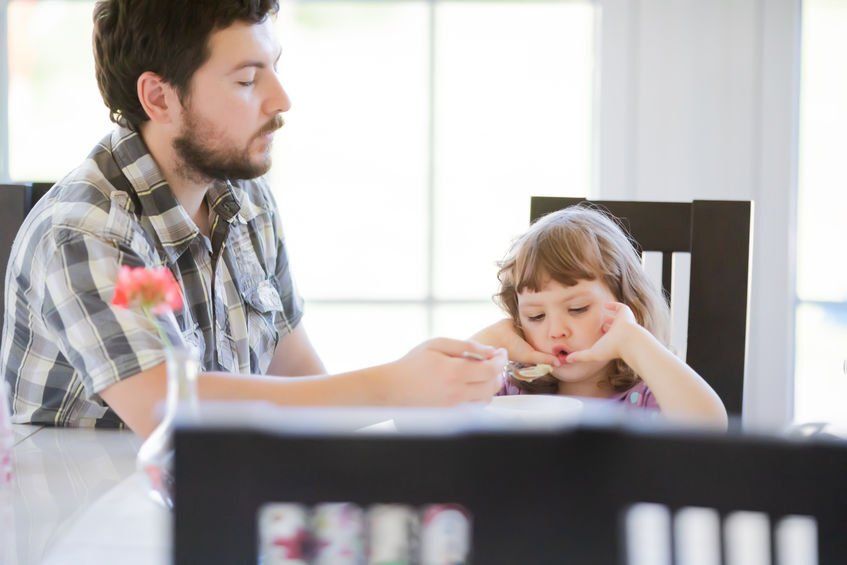
Thank you to Kristin Quinn of Toddlers and Tomatoes for this guest post ! When the average person gets hungry, they eat. Sometimes, they even think about a delicious food, their mouth starts to water, they get excited about obtaining said food, and they look forward to their snack or meal. This is why it is SO difficult for the ‘average person’ to understand feeding issues. Sure, all kids are picky eaters … to an extent, and for a period of time, usually. But people, even educated, medical professionals on occasion, can’t seem to wrap their heads around ‘feeding issues’ that go beyond the ‘typical’ childhood phenomenon of complaining at dinnertime. Even when parents themselves have a child with feeding issues, it is still a mystery. Even though they are living it day to day, it is still hard to comprehend. I like to break it down like this: If your child is having a hard time with food, think about all of the steps that are involved in eating. Really, try it. You’ve probably never given a second thought to the numerous steps involved in consuming food. Here is just a list off the top of my head. I am sure that my speech therapist, occupational therapist, GI doc, and dietician friends can come up with a bunch more! Child becomes aware that mealtime is approaching. They start to think about whatever it is that makes eating difficult for them (smell, texture, hunger, sitting still, using a utensil, chewing, swallowing – or lack of hunger, etc.) They may start talking about not wanting to come to the table, or start crying, or acting out. Child is asked to come to the table, closer to the ‘eating experience’. They don’t want to. They may not want to sit in the chair, they may not want to see the food or smell it. They might physically resist coming to the table. Child sees the food on the table, or worse, on their plate in front of them. They have to accept the food visually. They have to SEE that food that is so difficult for them to manage (for whatever reason). Child is presented with the food in front of them, or prepped on a utensil for them to pick up or allow into their mouth. Child smells the food. So now, they are seated, which may be an issue for them, they are looking at the food, they are smelling the food … all before it is even in their mouth!! Child has to PICK UP THE UTENSIL or the food itself and PUT IT IN THEIR MOUTH. Imagine how much that takes out of them when they DON’T want to eat what is in front of them. They have to either put it in themselves, or allow it to be put in. This is where a lot of behaviors come out …pushing, throwing the food, crying, gagging, coughing (even at just the sight or smell). Once the food gets in, if it gets in … they have to manage the food. Maybe they don’t have the skills to chew and swallow properly, or maybe they are sensitive to different textures. Here is where we often see an increase in gagging and coughing. Sometimes the gags and coughs are a result of all of this time to think about how difficult eating is going to be in conjunction with actually having the food in their mouth. Then, once the kiddo has managed the food in their oral cavity, they have to SWALLOW it. Again, often gagging and coughing are at play, and sometimes vomit. But why? What is the issue …are they not managing the food effectively? Are they worked up with anxiety? Are there other, yet to be determined issues? Once it is swallowed, there is a whole new set of ‘steps’. How is their GI tract going to handle the food? Are there allergies? Diagnosed? Undiagnosed? Are they going to vomit some more? Are they going to be constipated? Are they going to have a reflux episode? When you start to think of all the steps involved in eating, it is a wonder it comes so easily to the rest of us. When trying to support a child with feeding issues, or a friend, or yourself, consider all that is truly involved in eating. What would you add to the list?